
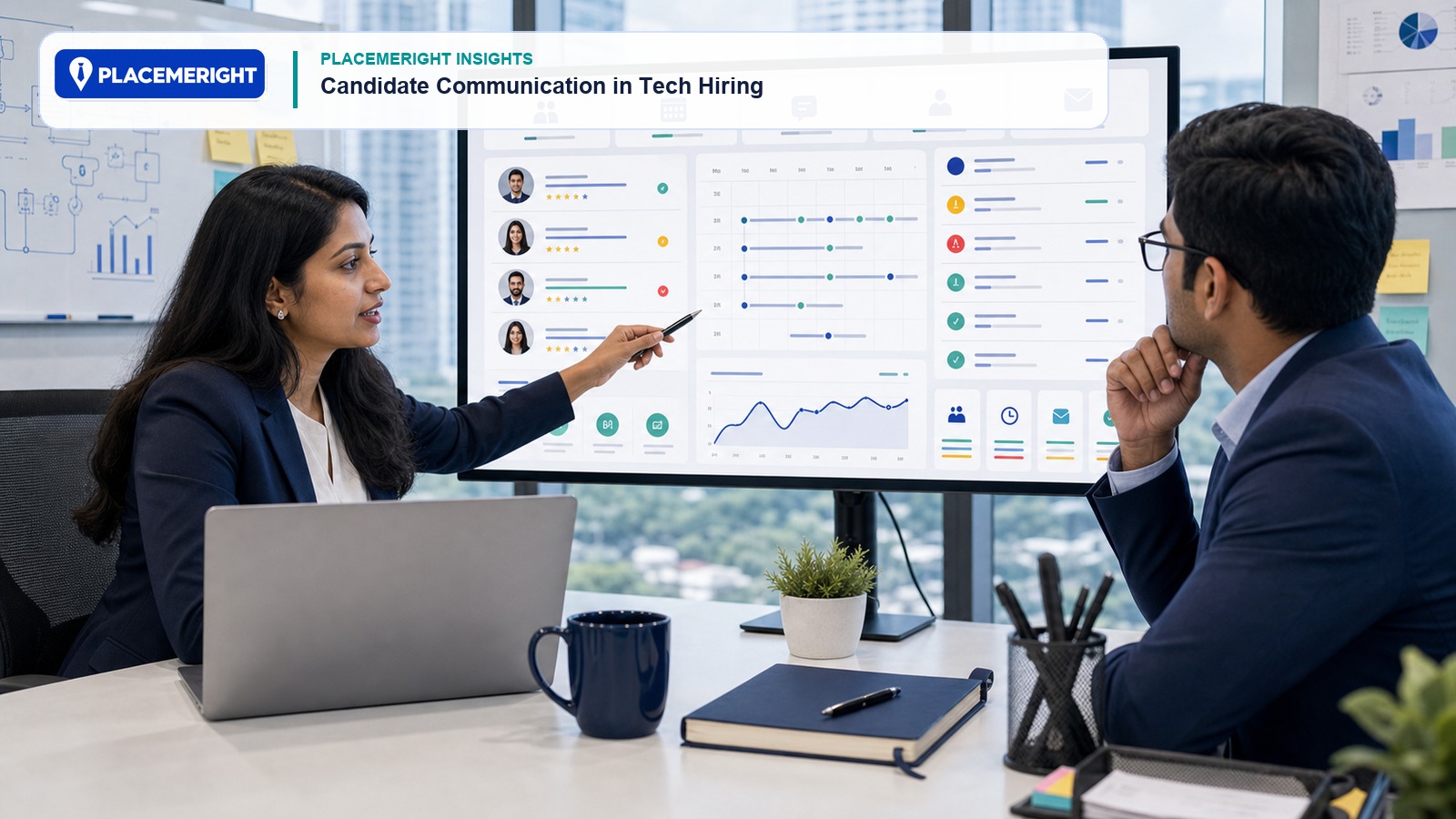
The silent killer of premium hiring: gaps between touchpoints
Most teams obsess over sourcing and screening—then lose great candidates because the process feels unclear.
When candidates experience silence, they don’t think “the recruiter is busy.” They think:
- “I’m a backup option.”
- “This company is chaotic.”
- “If this is the hiring process, onboarding will be worse.”
In tech hiring, speed and trust are inseparable. Candidate communication is not a “soft” layer—it’s an operational control that protects drop-off rates and offer acceptance.
This guide gives a practical cadence you can run with an internal TA team or a recruitment partner.
What a “candidate communication cadence” actually is
A cadence is not “send more follow-ups.” It’s a system with:
- a timeline promise (what the candidate should expect)
- stage SLAs (how quickly you communicate, not just schedule)
- fallback actions when an SLA is missed
- a single owner responsible for keeping momentum alive
If you can’t name the owner, you don’t have a cadence—you have good intentions.
Build a stage-by-stage communication SLA map (use this as your default)
Use these as starting points and adjust for your reality. The goal is consistency.
Stage 1: After the first conversation (screening)
- Candidate receives: next steps + timeline + who to contact
- SLA: within 2 hours (same business day)
Stage 2: After each interview round
- Candidate receives: acknowledgement + feedback window + “next step scheduling” promise
- SLA: acknowledgement within 2 hours, next-step update within 24–48 hours
Stage 3: If feedback is delayed
- Candidate receives: proactive update + revised date
- SLA: update within 24 hours of the missed window
Stage 4: Offer stage
- Candidate receives: offer timeline + compensation structure clarity + joining workflow
- SLA: same-day summary call/message after verbal alignment
Stage 5: Offer accepted → joining
- Candidate receives: weekly check-in cadence + onboarding clarity (documents, start date, first-week plan)
- SLA: consistent weekly rhythm (more frequent in the last 2–3 weeks)
The point is simple: candidates don’t need constant messages—they need predictable certainty.
The 10-touchpoint cadence (copy/paste and operationalize)
This cadence is designed for most mid-to-senior tech roles where the process spans 7–21 days.
Touchpoint 1: “Process map” (same day as screening)
Send:
- number of rounds
- what each round measures
- expected timeline
- feedback windows
- your single point of contact
Touchpoint 2: Calendar confirmation (within 2 hours of scheduling)
Send:
- confirmed slot
- interview format + platform
- interviewer names (if appropriate)
- prep pointers (timebox, what to expect)
Touchpoint 3: Pre-interview reminder (24 hours before)
Send:
- reminder + join link
- what to keep ready (ID, environment, repo access if any)
- reschedule protocol (who to message, how early)
Touchpoint 4: “Thank you + feedback window” (same day)
Send:
- a short thank you
- reminder of feedback window
- next step promise (“If we move forward, we will schedule within 72 hours.”)
Touchpoint 5: Feedback update (within 24–48 hours)
Send:
- proceed / reject
- if proceed: scheduling options immediately
- if reject: respectful closure (and optionally one improvement note)
Touchpoint 6: Reschedule handling (when it happens)
Always:
- acknowledge within 2 hours (business hours)
- offer next slots within 24 hours
- never reschedule twice without escalation
Touchpoint 7: “Verbal alignment” call (before drafting offer)
Align on:
- band + breakup (fixed, variable, bonus/equity if any)
- joining timeline constraints
- work model expectations
- non-negotiables (candidate + company)
This reduces late-stage surprises and reneges.
Touchpoint 8: Offer letter send + summary (same day)
Send:
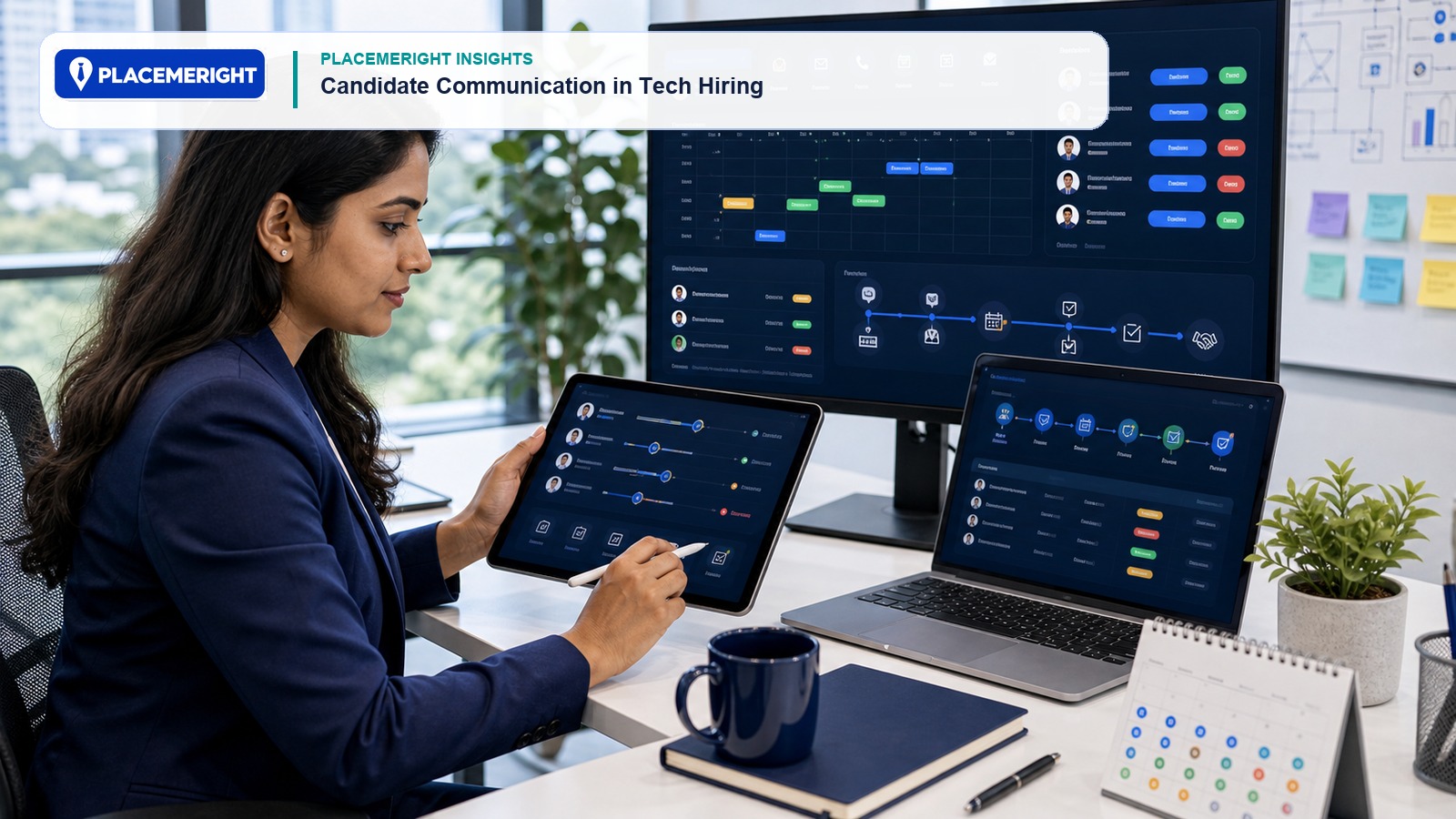
- offer letter
- a 5-bullet summary of key terms
- decision deadline (reasonable, not aggressive)
- support path for questions
Touchpoint 9: Post-offer check-in (48 hours after offer)
Ask:
- what’s unclear?
- what internal approvals are needed (family, relocation, buyout, etc.)?
- any competing processes/timelines we should account for?
Touchpoint 10: Offer accepted → joining cadence (weekly + milestone-based)
At minimum:
- weekly check-in (same day/time)
- milestone check-ins: docs submitted, background verification steps, laptop/onboarding steps, Day-1 plan
This is how premium teams keep trust alive during notice period.
The three message templates that fix most communication failures
Use templates to keep speed high and tone consistent. Personalize the first line.
Template A: “Process map” (screening follow-up)
- Thanks for speaking today. Here’s the process: [Round count + what each round measures]
- Timeline: typically [X] business days end-to-end.
- Feedback windows: you’ll hear from us within 24–48 hours after each round.
- Your single point of contact: [Name + WhatsApp/email]
Template B: “Delay update” (when feedback slips)
- Quick update: feedback is taking longer than planned due to [reason without oversharing].
- New committed update time: [date/time]
- If you have other timelines, please share them so we can align.
Template C: “Reschedule with respect”
- Sorry—we need to reschedule due to [reason].
- Here are the next earliest options: [3 slots].
- If none work, share 2 windows and we’ll confirm within 2 hours.
Professional communication is not about being verbose—it’s about being certain.
Make “candidate communication” measurable (or it won’t happen)
If you want this to stick, track three simple metrics weekly:
1. SLA adherence rate (touchpoints met ÷ touchpoints planned) 2. time between stages (median + p90) 3. drop-off reasons (tagged: slow feedback, reschedules, comp misalignment, role clarity, other offer)
This turns “candidate experience” from a feeling into an operating lever.
How to run this cadence with an RPO or tech recruitment agency
If you’re using an external hiring partner, don’t assume they will run communication well by default.
Define:
- one owner for candidate comms (by role family)
- one channel standard (email + WhatsApp/phone rules)
- a weekly report that includes SLA adherence + drop-off reasons
- escalation rules when hiring managers miss feedback SLAs
This is the difference between a vendor who “sends profiles” and a partner who protects conversion.
Quick checklist (copy/paste)
Use this as a lightweight standard for your TA/RPO team before you start interviews:
- Confirm the role charter (outcomes, scope, stakeholders).
- Define 5–7 signals to test (must-haves vs trainable).
- Run a structured loop (same questions, same scoring).
- Use a scorecard with clear pass/fail thresholds.
- Communicate timelines and feedback windows at every stage.
- Track funnel metrics (time-to-interview, pass-through, offer acceptance).
- Close with a crisp offer narrative and joining plan.
FAQs
How often should we communicate with candidates in a hiring process?
After every meaningful event (interview completed, decision made, schedule change) plus proactive updates when a feedback window is missed. Predictability matters more than frequency.
Should we give rejection feedback?
You don’t need long coaching notes, but respectful closure is essential. For later-stage candidates, one short improvement insight (where appropriate) can protect your employer brand and keep the door open.
What’s the fastest way to reduce candidate drop-offs?
Install stage SLAs and reschedule protocols, and ensure the next step is scheduled (not just “we’ll get back”) after each stage. Silence creates drop-offs; certainty prevents them.
Conclusion
The best hiring outcomes come from operational clarity: define what good looks like, use a structured interview loop, and evaluate candidates with scorecards instead of gut feel. When you communicate timelines clearly and track a few funnel metrics (speed, pass-through rates, and offer acceptance), you reduce drop-offs and hire faster without lowering the bar.
If you want help calibrating the role, tightening the screening, and improving shortlist quality for tech hiring in India, a specialist hiring partner can run this process end-to-end.
CTA (PlaceMeRight)
If you’re losing strong candidates due to reschedules, slow feedback, or unclear timelines, PlaceMeRight can run a premium hiring cadence with structured communication, interview operations SLAs, and joining-risk check-ins—so your funnel stays fast and your offers convert.
- Talk to us: `/contact/`
- Explore RPO pods: `/rpo-services/` and `/recruitment-process-outsourcing-india/`
- Explore tech recruitment: `/tech-recruitment/` and `/it-recruitment-agency-india/`
- Review credentials: `/credentials/`
References
- Candidate communication and hiring process feedback discipline (SHRM): https://www.shrm.org/mena/topics-tools/news/talent-acquisition/feedback-to-candidates-will-improve-hiring-process
- Personalizing recruiter outreach to improve engagement (LinkedIn Talent Blog): https://www.linkedin.com/business/talent/blog/talent-acquisition/helping-recruiters-save-time-increase-candidate-engagement-with-ai
- Candidate expectations and experience trends (Voice of the Candidate) (Gartner): https://www.gartner.com/en/newsroom/press-releases/2024-12-16-gartner-hr-research-finds-63-of-prospective-candidates-received-a-job-offer-in-3q24
Related PlaceMeRight resources
Our Tech Recruitment Services by City
Looking to hire vetted software engineers or scale your engineering teams in India's leading tech hubs? Explore our localized recruitment services:
Tags: