
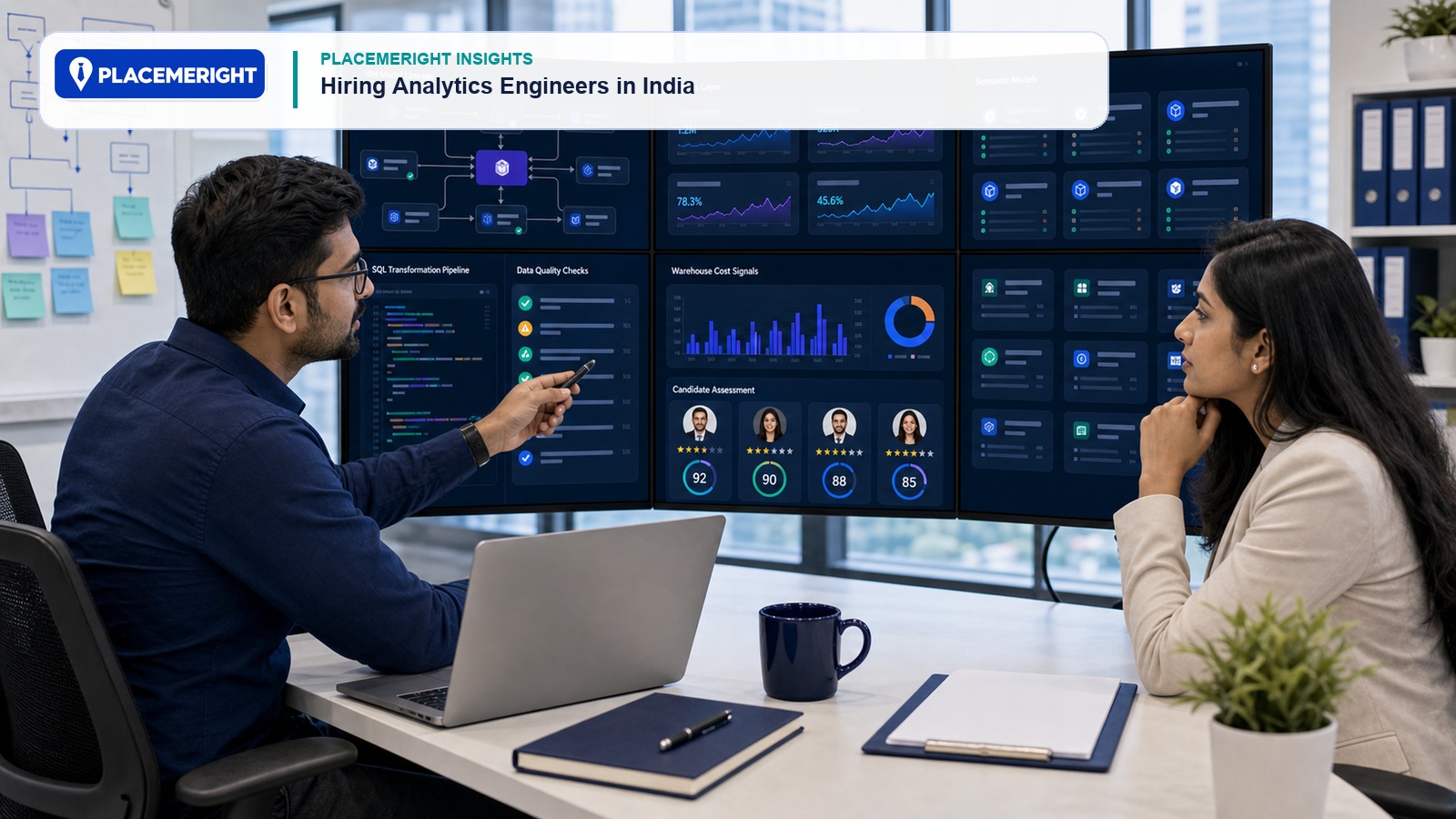
Why analytics engineering hiring is growing in India
As companies mature their data stack, the bottleneck shifts:
- Data engineers build ingestion and infrastructure.
- Analysts need clean, trusted models to answer business questions.
The role that bridges this gap—using software engineering discipline for analytics code—is the analytics engineer. It’s a critical hire for teams building self-serve analytics, consistent metrics, and “trustworthy numbers” across tools.
If you’re using a technical recruitment agency in India, you’ll get better results when you hire for analytics engineering outcomes, not generic “SQL + dashboards.”
What an analytics engineer does (in plain terms)
Analytics engineers:
- transform raw data into clean, analysis-ready models
- test and document transformation logic
- use version control and CI for analytics code
- help define and maintain metric definitions and semantic layers
In many stacks, analytics engineers spend meaningful time in dbt, Git, and a data warehouse—not in Excel.
Skills matrix (what to shortlist for)
Must-have
- strong SQL and data modeling fundamentals
- understanding of dimensional modeling and event modeling basics
- experience with dbt-style transformation workflows (or equivalent)
- testing mindset: data quality checks, expectations, contracts
- documentation discipline: definitions, lineage, caveats, assumptions
Strong advantage
- metric governance (metrics layer / semantic layer concepts)
- CI/CD for analytics: PR reviews, environments, and deployments
- stakeholder collaboration: translating business questions into models
- performance awareness: warehouse costs, query optimization patterns
Red flags
- only dashboard experience, no modeling discipline
- cannot explain joins/grain and how metrics can drift
- no testing or documentation habits
A practical interview loop for analytics engineers
Round 1: Hiring manager screen (30–45 minutes)
Ask:
- what models they’ve built and why
- how they ensure data quality
- how they handle metric disagreements (“whose revenue number is right?”)
Round 2: Modeling + SQL exercise (60–90 minutes)
Give:
- a small set of tables and a business question
Evaluate:
- correct grain
- clean naming
- clarity of assumptions
- performance awareness
Round 3: dbt-style workflow round (45–60 minutes)
Ask them to:
- write a model with tests (unique, not null, relationships)
- propose documentation (descriptions, exposures)
- explain how they’d structure a project for multiple domains
Round 4: Metrics governance conversation (45 minutes)
Prompt:
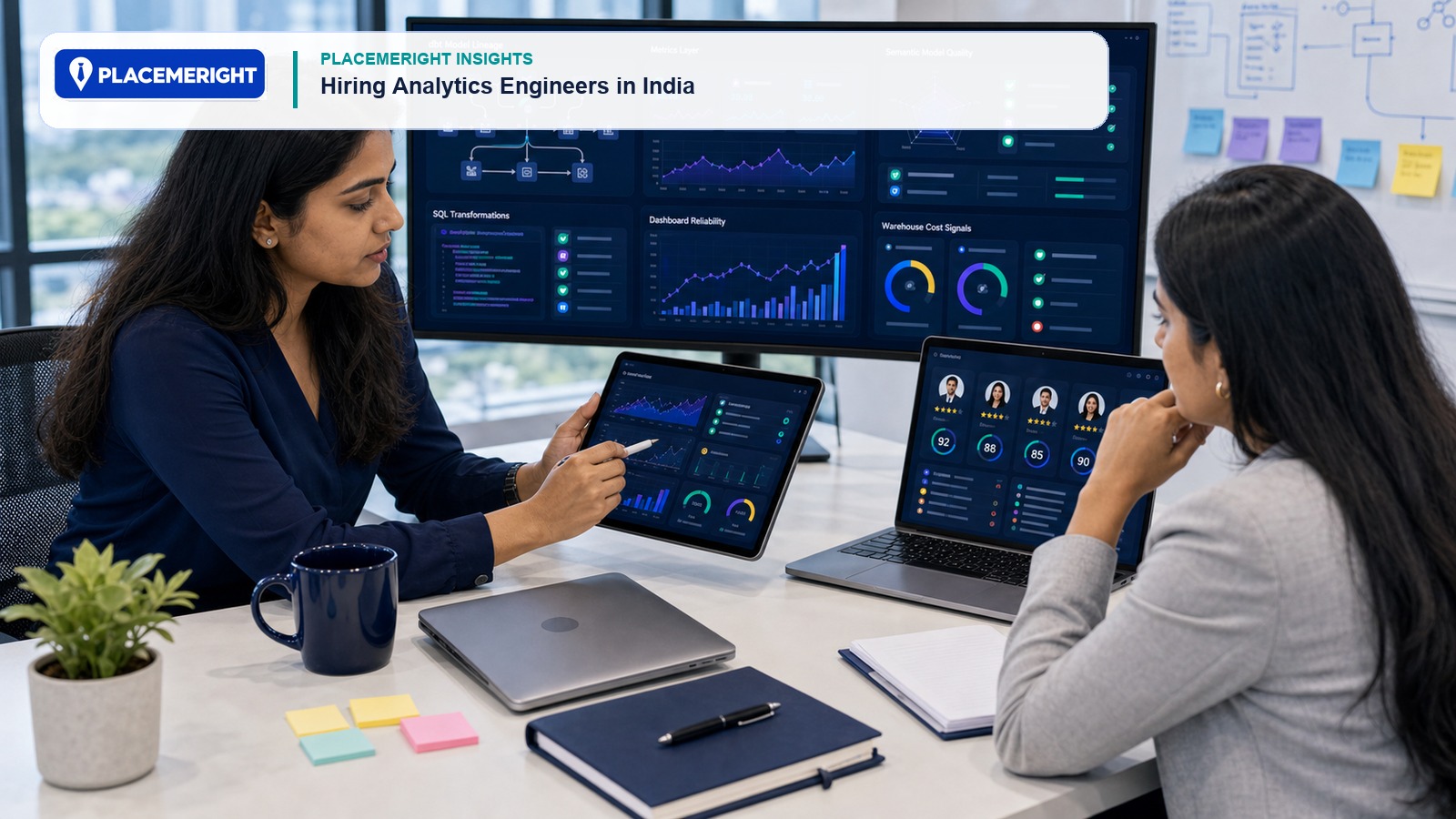
- “How would you define metrics once and reuse across BI tools?”
Look for:
- understanding of semantic/metrics layer trade-offs
- versioning and change management
- stakeholder communication (breaking changes, metric drift)
Job description structure that attracts the right candidates
Include:
- your data stack context (warehouse, BI tools, orchestration)
- “first 90 days” deliverables (models, tests, documentation)
- expectations on metric governance and collaboration
- examples of domains they’ll own (product analytics, finance, growth)
Avoid:
- mixing this role with data engineering infrastructure ownership
- vague statements like “own data end-to-end” without scoping
Quick checklist (copy/paste)
Use this as a lightweight standard for your TA/RPO team before you start interviews:
- Confirm the role charter (outcomes, scope, stakeholders).
- Define 5–7 signals to test (must-haves vs trainable).
- Run a structured loop (same questions, same scoring).
- Use a scorecard with clear pass/fail thresholds.
- Communicate timelines and feedback windows at every stage.
- Track funnel metrics (time-to-interview, pass-through, offer acceptance).
- Close with a crisp offer narrative and joining plan.
FAQs
Are analytics engineers the same as data engineers?
No. Data engineers typically focus on ingestion, pipelines, and platform reliability. Analytics engineers focus on modeling, testing, documentation, and enabling self-serve analytics.
Do analytics engineers need dbt?
dbt is common, but the core skill is modeling with software engineering practices. If you use dbt, interview for that workflow explicitly.
How do we hire analytics engineers faster in India?
Partner with a specialist IT recruitment agency in India or a tech recruitment partner that can pre-screen for modeling and testing discipline—not only SQL.
Conclusion
The best hiring outcomes come from operational clarity: define what good looks like, use a structured interview loop, and evaluate candidates with scorecards instead of gut feel. When you communicate timelines clearly and track a few funnel metrics (speed, pass-through rates, and offer acceptance), you reduce drop-offs and hire faster without lowering the bar.
If you want help calibrating the role, tightening the screening, and improving shortlist quality for tech hiring in India, a specialist hiring partner can run this process end-to-end.
CTA (PlaceMeRight)
If you’re hiring analytics engineers, data analysts, or data talent in India for modern data stacks, PlaceMeRight can support role-calibrated shortlisting and structured screening.
- Talk to us: `/contact/`
- Explore hiring support: `/tech-recruitment/`
- If you need broader technical hiring coverage: `/it-recruitment-agency-india/`
References
- dbt Labs: What is analytics engineering? (updated May 2026): https://www.getdbt.com/blog/what-is-analytics-engineering
- dbt Labs: How the dbt Semantic Layer works (updated May 2026): https://www.getdbt.com/blog/how-the-dbt-semantic-layer-works
- Holistics: Metrics layer concept (Apr 2026): https://www.holistics.io/bi-tools/concepts/metrics-layer/
Related PlaceMeRight resources
Our Tech Recruitment Services by City
Looking to hire vetted software engineers or scale your engineering teams in India's leading tech hubs? Explore our localized recruitment services:
Tags: