
Why cloud security hiring is getting harder (and more urgent)
Cloud-native systems move fast: microservices, managed services, Kubernetes, ephemeral environments, and CI/CD. Security failures now often come from:
- misconfigured IAM and excessive permissions
- secrets handling mistakes
- Kubernetes misconfiguration and weak boundaries
- insecure defaults during rapid shipping
Hiring a cloud security engineer is hiring someone who can reduce risk while keeping delivery moving.
Define the role boundary: cloud security engineer vs AppSec vs DevOps
Clarify ownership upfront:
- Cloud security engineering: IAM, cloud guardrails, Kubernetes hardening, detection, governance
- AppSec: secure SDLC, SAST/DAST, code review, vulnerability management
- DevOps/SRE: reliability, operations, platform delivery (with some security)
Many candidates span boundaries. But your interview must match the ownership you need.
What to screen for (high-signal cloud security capabilities)
1) IAM and least privilege (real, practical)
Ask:
- “How do you design least privilege for services and humans without breaking workflows?”
Signals:
- can describe role-based models, separation of duties, break-glass paths
- understands how to audit and reduce privilege over time
- knows how identity becomes the attack surface
2) Kubernetes security thinking
Ask:
- “If you inherit a cluster with unknown security posture, what’s your first week plan?”
Signals:
- prioritizes: API access, RBAC, network policies, workload identity, secrets
- talks about admission control, image provenance, runtime detection
- can explain trade-offs between guardrails and developer experience
3) Threat modeling with engineers
Ask:
- “Threat model a simple service: what are your top risks and mitigations?”
Signals:
- can keep it practical (not theoretical)
- can translate threats into engineering tasks
- knows how to choose mitigations with limited time
Interview loop (4 rounds)
Round 1: Screen (45 min)
Ask for one incident:
- “Tell me about a cloud security issue you investigated or prevented. What did you change?”
Look for:
- evidence-based analysis
- concrete mitigations and follow-ups
Round 2: IAM deep-dive (60 min)
Scenario:
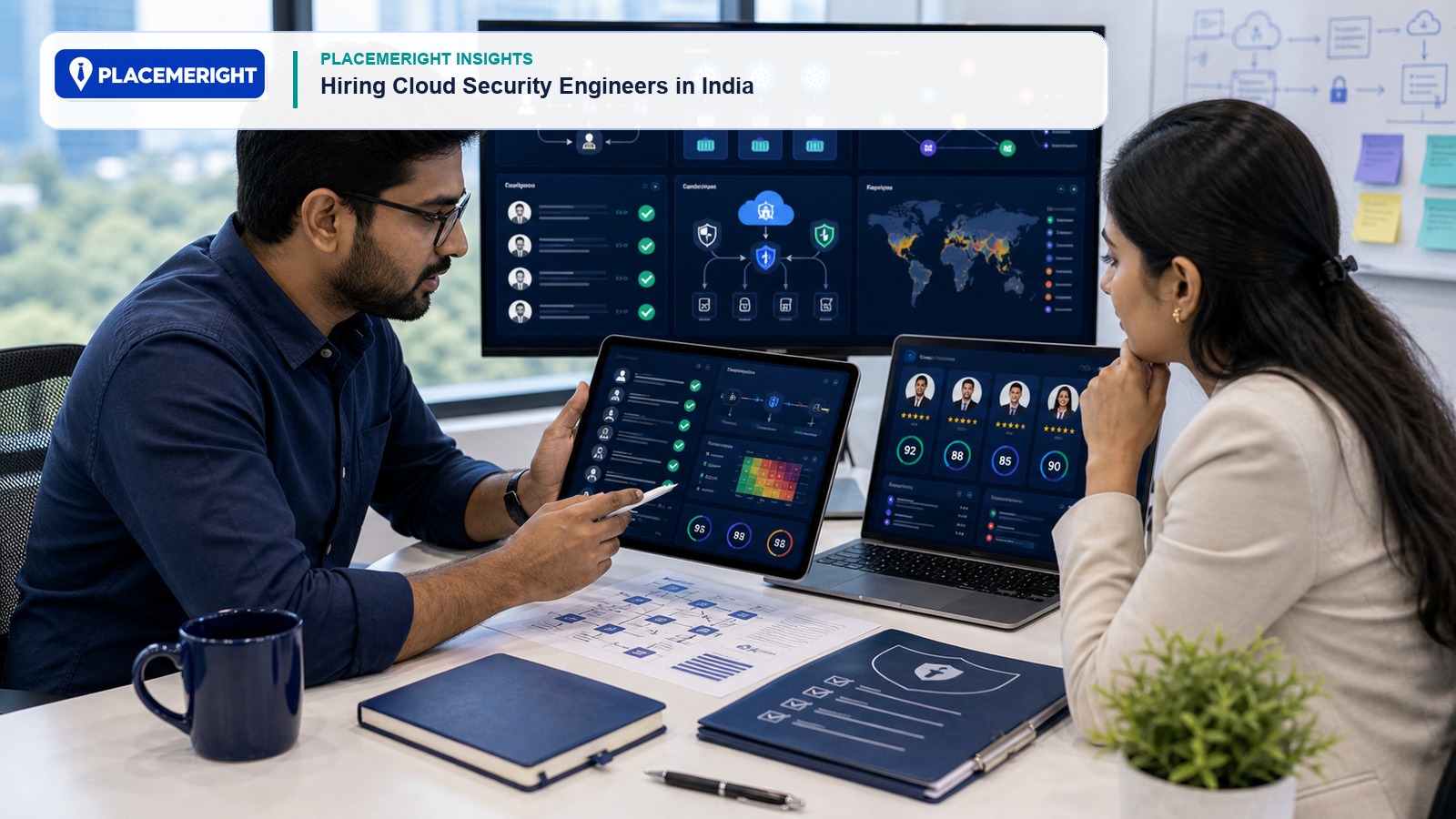
- “We have multiple services and teams. Design an IAM model for environments and least privilege.”
Score:
- clarity and simplicity
- auditability
- operational practicality (break-glass, rotations, offboarding)
Round 3: Kubernetes hardening scenario (60 min)
Scenario:
- “We’re moving from single cluster to multi-tenant. What guardrails do you implement?”
Score:
- RBAC, namespace boundaries, network isolation
- secrets management strategy
- policy-as-code and enforcement approach
Round 4: Threat modeling + influence (60 min)
Ask:
- “Pick one feature (payments, auth, data export). Threat model it with a product engineer in the room.”
Score:
- collaboration and clarity
- ability to prioritize and reduce risk quickly
Scorecard
Rate 1–5:
- IAM and identity security maturity
- Kubernetes security and hardening depth
- threat modeling practicality
- incident response and learning mindset
- communication and influence with engineering teams
Red flags
- only speaks in certifications and tools, not real systems
- cannot explain how to reduce permissions without breaking delivery
- focuses on perfect security with no sense of trade-offs
- treats developers as adversaries (security vs engineering culture)
Quick checklist (copy/paste)
Use this as a lightweight standard for your TA/RPO team before you start interviews:
- Confirm the role charter (outcomes, scope, stakeholders).
- Define 5–7 signals to test (must-haves vs trainable).
- Run a structured loop (same questions, same scoring).
- Use a scorecard with clear pass/fail thresholds.
- Communicate timelines and feedback windows at every stage.
- Track funnel metrics (time-to-interview, pass-through, offer acceptance).
- Close with a crisp offer narrative and joining plan.
FAQs
Do we need a cloud security engineer if we already have DevOps?
Often yes. DevOps teams can implement controls, but cloud security requires dedicated focus on IAM models, guardrails, detection, and threat-informed prioritization—especially as systems scale.
What’s the fastest way to improve cloud security posture after hiring?
Start with IAM audit + least privilege roadmap, secrets management, Kubernetes guardrails, and detection/alerting. Establish a cadence where security is part of delivery, not a quarterly project.
Should threat modeling be a formal process?
Keep it lightweight and repeatable: a short template used in design reviews. The goal is better decisions, not paperwork.
Conclusion
The best hiring outcomes come from operational clarity: define what good looks like, use a structured interview loop, and evaluate candidates with scorecards instead of gut feel. When you communicate timelines clearly and track a few funnel metrics (speed, pass-through rates, and offer acceptance), you reduce drop-offs and hire faster without lowering the bar.
If you want help calibrating the role, tightening the screening, and improving shortlist quality for tech hiring in India, a specialist hiring partner can run this process end-to-end.
CTA (PlaceMeRight)
If you’re hiring cloud security engineers in India and need candidates who can balance guardrails with delivery velocity, PlaceMeRight can support with calibrated screening and shortlist quality.
- Talk to us: `/contact/`
- Explore tech recruitment: `/tech-recruitment/`
- For embedded hiring pods: `/rpo-services/`
References
- OWASP Kubernetes Security Cheat Sheet: https://cheatsheetseries.owasp.org/cheatsheets/Kubernetes_Security_Cheat_Sheet.html
- CIS Kubernetes Benchmarks (secure configuration guidance): https://www.cisecurity.org/benchmark/kubernetes
- Kubernetes docs: RBAC authorization: https://kubernetes.io/docs/reference/access-authn-authz/rbac/
- MITRE ATT&CK cloud matrix (cloud threats reference): https://attack.mitre.org/matrices/enterprise/cloud/
Related PlaceMeRight resources
Our Tech Recruitment Services by City
Looking to hire vetted software engineers or scale your engineering teams in India's leading tech hubs? Explore our localized recruitment services:
Tags: