
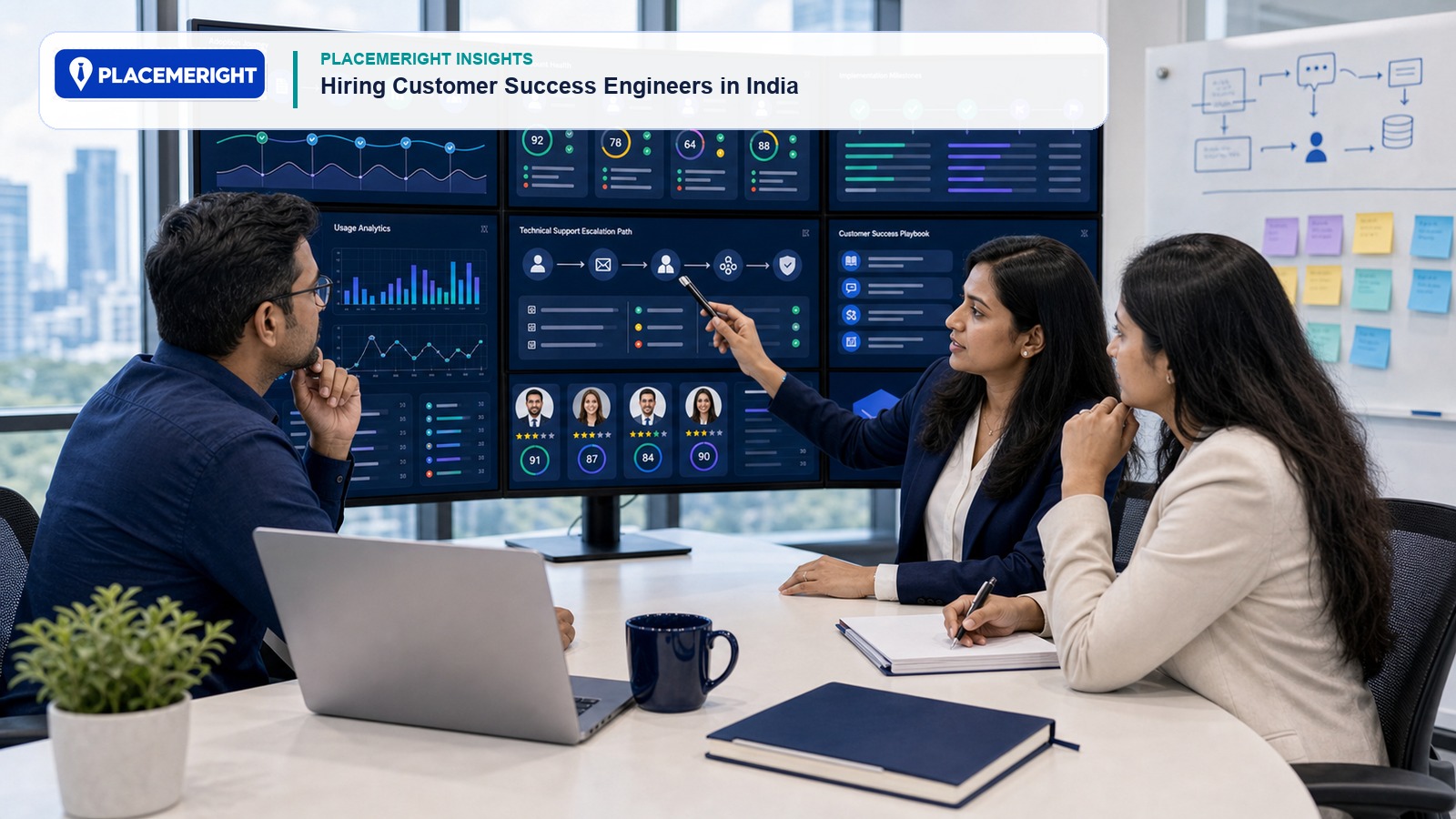
Why Customer Success hiring fails (and why churn surprises you)
Many Customer Success interviews over-test:
- communication polish
- “years of CSM experience”
- generic questions about empathy
But the real job—especially for technical products—requires execution:
- plan onboarding that drives activation
- unblock integration and configuration issues
- manage stakeholders and expectations
- detect renewal risk early and run a recovery plan
- coordinate with product/engineering without becoming a “ticket forwarder”
If you hire for friendliness without operational rigor, you’ll get “busy” CSMs and surprised churn.
What a strong Customer Success Engineer should own
For B2B SaaS and developer tools, strong Customer Success Engineers / technical CSMs typically own:
- onboarding plans: milestones, timelines, responsibilities, and success criteria
- adoption metrics: activation, feature usage, time-to-value, retention signals
- technical troubleshooting: integrations, APIs, SSO, environments, configs
- stakeholder management: champions, economic buyers, and internal teams
- renewal readiness: risk detection, exec narratives, QBR discipline
- voice of customer: structured feedback, not random anecdotes
If a candidate can’t explain how they drive time-to-value, they won’t protect retention.
The failure modes to screen out
1) “Ticket routing” masquerading as success
They escalate everything to support/engineering and can’t own outcomes.
2) No metric clarity
They can’t define adoption metrics or a success plan.
3) No stakeholder mapping
They treat an account as a single “user,” not a set of roles with different motivations.
4) Weak renewal-risk muscle
They discover churn only when the renewal date arrives.
The signals that predict Customer Success execution
Look for:
- plan-driven thinking: onboarding as milestones and accountability
- technical credibility: can diagnose integration issues at a high level
- commercial awareness: understands value, risk, and renewal narratives
- calm communication: can de-escalate without overpromising
- internal influence: can work cross-functionally without drama
A practical interview loop for Customer Success Engineers in India
Round 1: 20-minute screen (signals: clarity + ownership)
Ask:
- “What was your best onboarding? What made it work?”
- “What adoption metrics did you track weekly?”
- “Tell me about a churn you prevented. What did you do and when?”
Pass criteria:
- talks in milestones, signals, and timelines—not only “relationships”
Round 2: 45-minute onboarding case (signals: planning + success criteria)
Scenario:
- New customer: mid-market
- Goal: integrate product within 30 days
- Constraints: limited engineering bandwidth on customer side
Ask the candidate to draft:
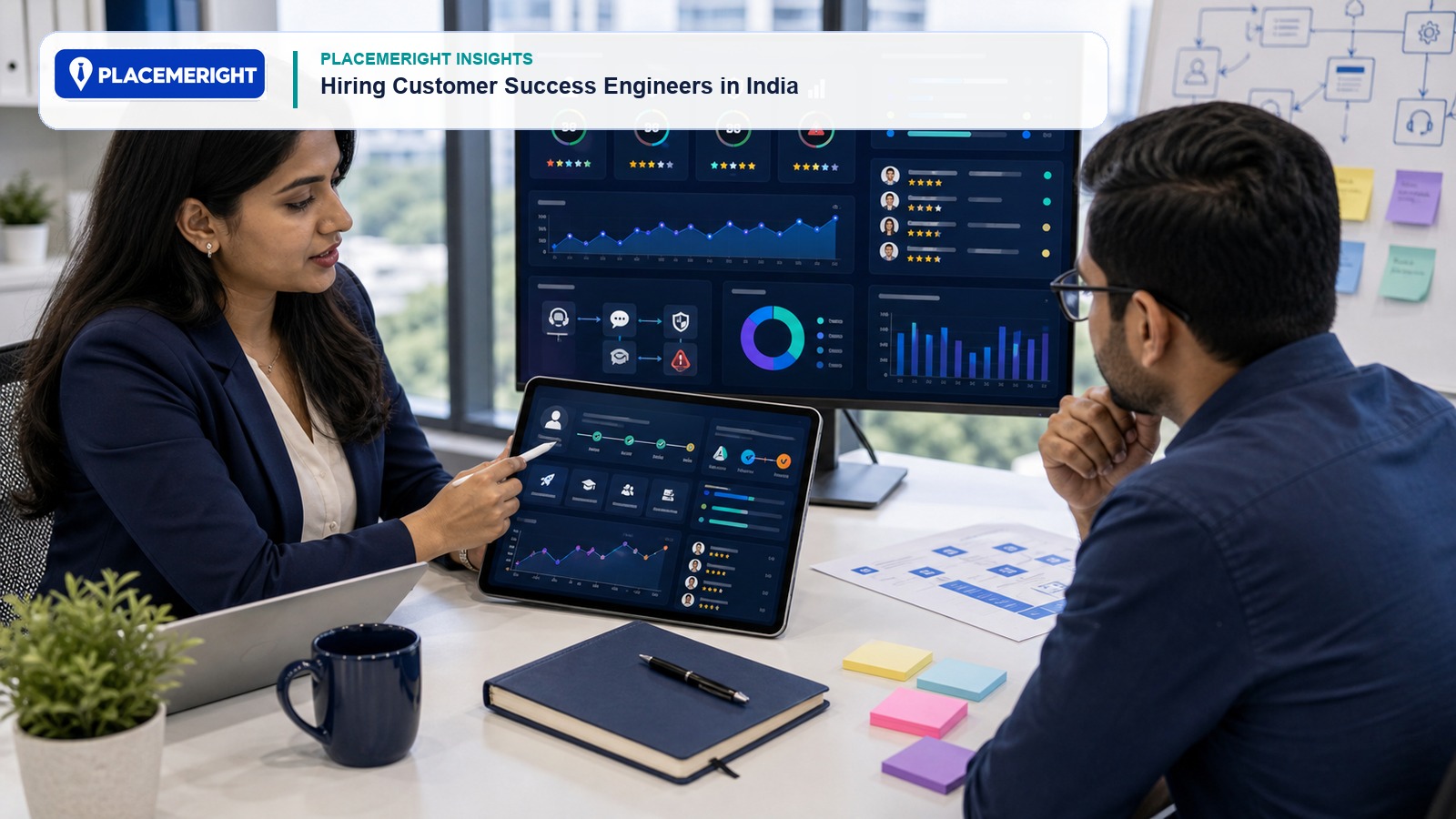
- a 30-day onboarding plan (milestones + owners)
- what “go-live” means (success criteria)
- the top 5 risks and mitigations
Strong candidates include:
- stakeholder mapping (who signs off, who uses daily)
- clear next steps after go-live (adoption expansion plan)
Round 3: 45-minute technical troubleshooting case (signals: credibility)
Pick a common scenario from your product:
- API auth fails
- SSO misconfigured
- webhooks not received
- data sync lag
Ask:
- what questions they ask first
- how they isolate whether it’s customer config vs product issue
- what they communicate while investigating
You’re not testing deep engineering—you’re testing structured debugging and communication.
Round 4: 30-minute renewal-risk simulation (signals: maturity under pressure)
Scenario:
- usage dropped 40% this month
- champion changed roles
- renewal in 60 days
Ask the candidate to:
- diagnose likely causes
- propose a 2-week recovery plan
- draft an exec narrative (value delivered + next milestones)
Strong candidates don’t blame the customer. They build a plan with accountability.
A scorecard you can use
Rate 1–5:
1) Onboarding rigor (milestones + success criteria)
2) Adoption metrics (signals and operating rhythm)
3) Technical credibility (structured troubleshooting)
4) Stakeholder management (mapping and alignment)
5) Renewal-risk handling (early detection + recovery plan)
Quick checklist (copy/paste)
Use this as a lightweight standard for your TA/RPO team before you start interviews:
- Confirm the role charter (outcomes, scope, stakeholders).
- Define 5–7 signals to test (must-haves vs trainable).
- Run a structured loop (same questions, same scoring).
- Use a scorecard with clear pass/fail thresholds.
- Communicate timelines and feedback windows at every stage.
- Track funnel metrics (time-to-interview, pass-through, offer acceptance).
- Close with a crisp offer narrative and joining plan.
FAQs
How is Customer Success different from Support?
Support fixes issues. Customer Success drives outcomes: activation, adoption, renewals, and value narratives. Strong teams coordinate closely, but success is not just ticket resolution.
Do we need technical CSMs for every product?
If your product requires integration, configuration, or developer workflows, technical CSMs reduce time-to-value and improve retention. For simpler products, generalist CSMs can work.
What’s the fastest way to improve CSM shortlist quality?
Use an onboarding case + renewal-risk simulation. Many candidates interview well but can’t produce a concrete plan.
Conclusion
The best hiring outcomes come from operational clarity: define what good looks like, use a structured interview loop, and evaluate candidates with scorecards instead of gut feel. When you communicate timelines clearly and track a few funnel metrics (speed, pass-through rates, and offer acceptance), you reduce drop-offs and hire faster without lowering the bar.
If you want help calibrating the role, tightening the screening, and improving shortlist quality for tech hiring in India, a specialist hiring partner can run this process end-to-end.
CTA (PlaceMeRight)
If churn surprises you and onboarding is inconsistent, PlaceMeRight can help you hire Customer Success Engineers in India who run structured onboarding, drive adoption, and protect renewals—without overpromising.
- Talk to us: `/contact/`
- Explore tech recruitment: `/tech-recruitment/` and `/it-recruitment-agency-india/`
- For embedded hiring pods: `/rpo-services/` and `/recruitment-process-outsourcing-india/`
- Review trust markers: `/credentials/`
References
- Customer Success operating concepts (Gainsight overview): https://www.gainsight.com/guides/what-is-customer-success/
- Net retention and SaaS health metrics (general guide): https://www.saastr.com/saas-metrics-2-0-a-guide-to-measuring-and-improving-what-matters/
- Google SRE book (incident communication patterns that help with customer escalations): https://sre.google/sre-book/table-of-contents/
Related PlaceMeRight resources
Our Tech Recruitment Services by City
Looking to hire vetted software engineers or scale your engineering teams in India's leading tech hubs? Explore our localized recruitment services:
Tags: