
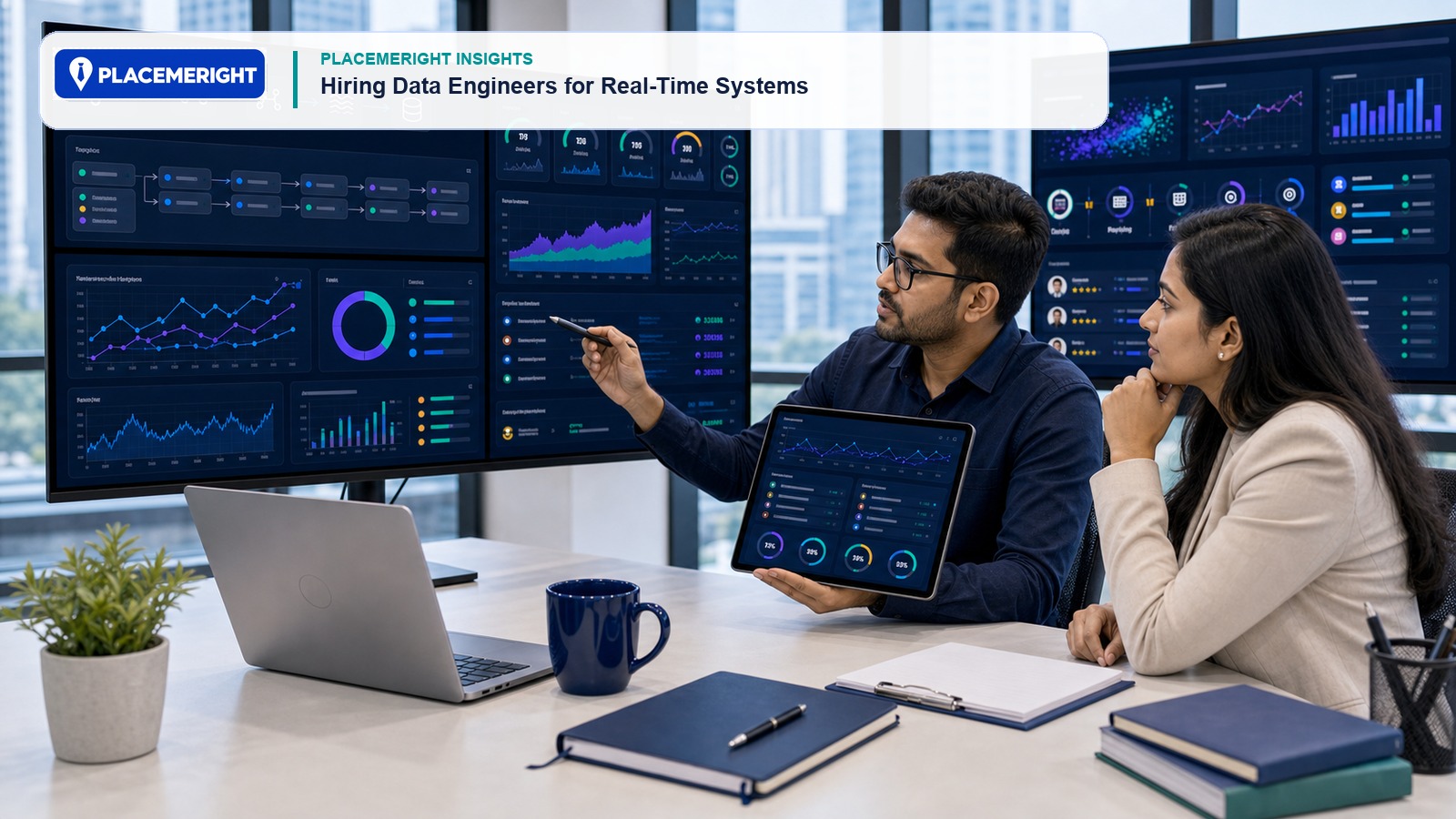
Why real-time data engineering is a different hiring problem
Batch data engineering is about pipelines. Real-time data engineering is about systems:
- event design (what is an event, what is state?)
- schema evolution and compatibility
- latency vs correctness trade-offs
- consumer coordination and replay strategy
- production operations (on-call, monitoring, backpressure)
If your team is hiring for streaming, interview for operational thinking—not just tool familiarity.
What to screen for (high-signal real-time skills)
1) Event modeling and contracts
Ask:
- “What makes a good event schema? How do you version it?”
Signals:
- understands backwards/forwards compatibility concepts
- can explain how consumers evolve safely
- uses validation and contracts as first-class artifacts
2) Reliability thinking
Ask:
- “How do you design for replay? What happens when a consumer lags?”
Signals:
- knows idempotency patterns
- can discuss at-least-once realities and de-dup strategies
- understands why ‘exactly-once’ claims have constraints
3) Observability and production ownership
Ask:
- “What do you monitor in a streaming system?”
Signals:
- lag, throughput, error rates, DLQs, schema failures
- runbooks and incident response habits
4) Practical engineering trade-offs
Ask:
- “When would you not use Kafka?”
Signals:
- can pick simpler tools when appropriate
- can articulate costs and operational overhead
Interview loop (4 rounds)
Round 1: Screen (45 min)
Pick one streaming project and ask for:
- the original goal
- the architecture
- the top failure mode they encountered
- how they measured success (latency, freshness, correctness)
Round 2: System design (60 min)
Scenario:
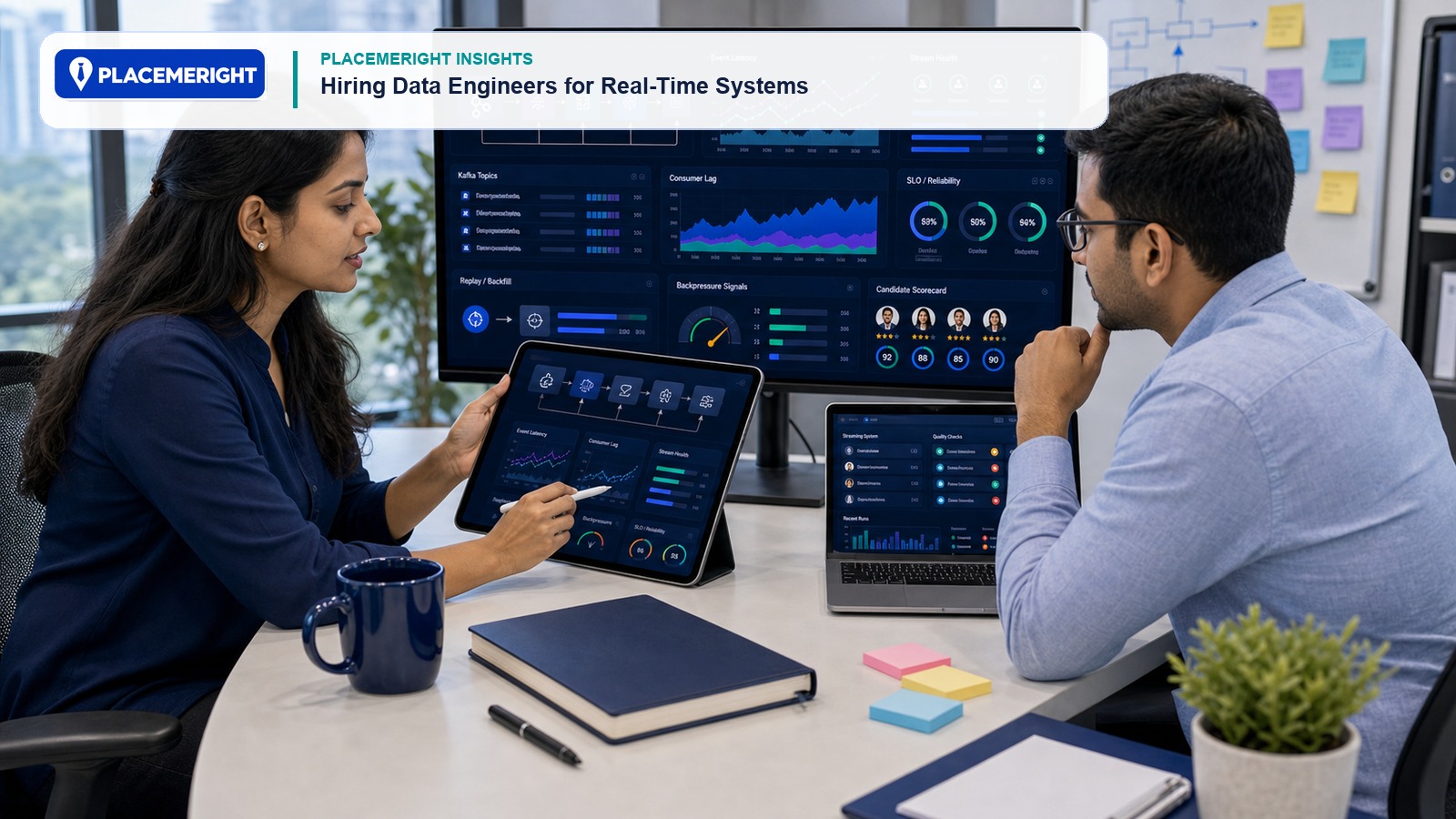
- “Design a real-time fraud signal pipeline: ingest events, enrich, score, and serve to downstream consumers.”
Score:
- data contracts and schema evolution plan
- replay story
- failure handling (DLQ, retries)
- monitoring and alerting
Round 3: Debugging + incident story (60 min)
Ask:
- “Tell me about a streaming incident. What were the symptoms? How did you isolate root cause?”
Signals:
- uses evidence (metrics, logs, traces)
- can talk about backpressure and consumer lag
- can propose durable fixes (not only manual resets)
Round 4: Practical deep-dive (60 min)
Pick one:
- review a pseudo design document and ask for improvements
- schema evolution exercise (v1 → v2; what breaks?)
- idempotency and de-dup patterns discussion
Scorecard
Rate 1–5:
- event modeling and contracts
- reliability and replay strategy
- operational maturity (monitoring/runbooks)
- performance and cost trade-offs
- communication (clear design docs and incident narratives)
Red flags
- can’t explain what “replay” means in production
- treats streaming like “just another pipeline”
- no monitoring story beyond “check logs”
- confuses exactly-once marketing with real-world semantics
Quick checklist (copy/paste)
Use this as a lightweight standard for your TA/RPO team before you start interviews:
- Confirm the role charter (outcomes, scope, stakeholders).
- Define 5–7 signals to test (must-haves vs trainable).
- Run a structured loop (same questions, same scoring).
- Use a scorecard with clear pass/fail thresholds.
- Communicate timelines and feedback windows at every stage.
- Track funnel metrics (time-to-interview, pass-through, offer acceptance).
- Close with a crisp offer narrative and joining plan.
FAQs
Do real-time data engineers need to be on-call?
For critical streaming systems, yes—or at least they should design with on-call realities in mind: runbooks, alerts, safe deploys, and observable failure modes.
Should we hire Kafka specialists or generalist data engineers?
If streaming is core to your product, specialists can accelerate maturity. If streaming is only a small edge case, a strong generalist with system design ability can succeed with the right mentorship.
How do we avoid over-engineering streaming?
Start with clear freshness/latency requirements and cost constraints. Build the simplest architecture that meets those needs, then iterate based on incidents and load.
Conclusion
The best hiring outcomes come from operational clarity: define what good looks like, use a structured interview loop, and evaluate candidates with scorecards instead of gut feel. When you communicate timelines clearly and track a few funnel metrics (speed, pass-through rates, and offer acceptance), you reduce drop-offs and hire faster without lowering the bar.
If you want help calibrating the role, tightening the screening, and improving shortlist quality for tech hiring in India, a specialist hiring partner can run this process end-to-end.
CTA (PlaceMeRight)
If you’re hiring real-time data engineers in India and want candidates who can own reliability and production outcomes, PlaceMeRight can support with calibrated screening and shortlist quality.
- Talk to us: `/contact/`
- Explore tech recruitment: `/tech-recruitment/`
- For embedded hiring pods: `/rpo-services/`
References
- Kafka design (semantics and trade-offs): https://kafka.apache.org/41/design/design/
- Kafka Streams core concepts (delivery semantics background): https://kafka.apache.org/10/streams/core-concepts/
Related PlaceMeRight resources
Our Tech Recruitment Services by City
Looking to hire vetted software engineers or scale your engineering teams in India's leading tech hubs? Explore our localized recruitment services:
Tags: